The hardest part isn't sex. It's trust.
After infidelity, the impulse is often to jump straight back into physical intimacy as proof that things are "normal" again. That's backwards. Sex after betrayal requires more honesty, more boundaries, and more patience than almost any other relationship challenge. And honestly, that's where lemon vibrators come in.
They're not a fix. But they're a powerful tool for rebuilding pleasure without the performance pressure that makes reconnection so difficult.
Why rebuilding intimacy after infidelity is different
Infidelity damages three things at once. Trust is the obvious one. But it also damages vulnerability (your partner saw you as not enough) and the nervous system (your body learned that intimacy isn't safe). Those last two don't heal through conversation alone.
When couples try to resume sex before those nervous systems have settled, they end up with one person performing and one person watching. That's when touch starts to feel like surveillance instead of connection.
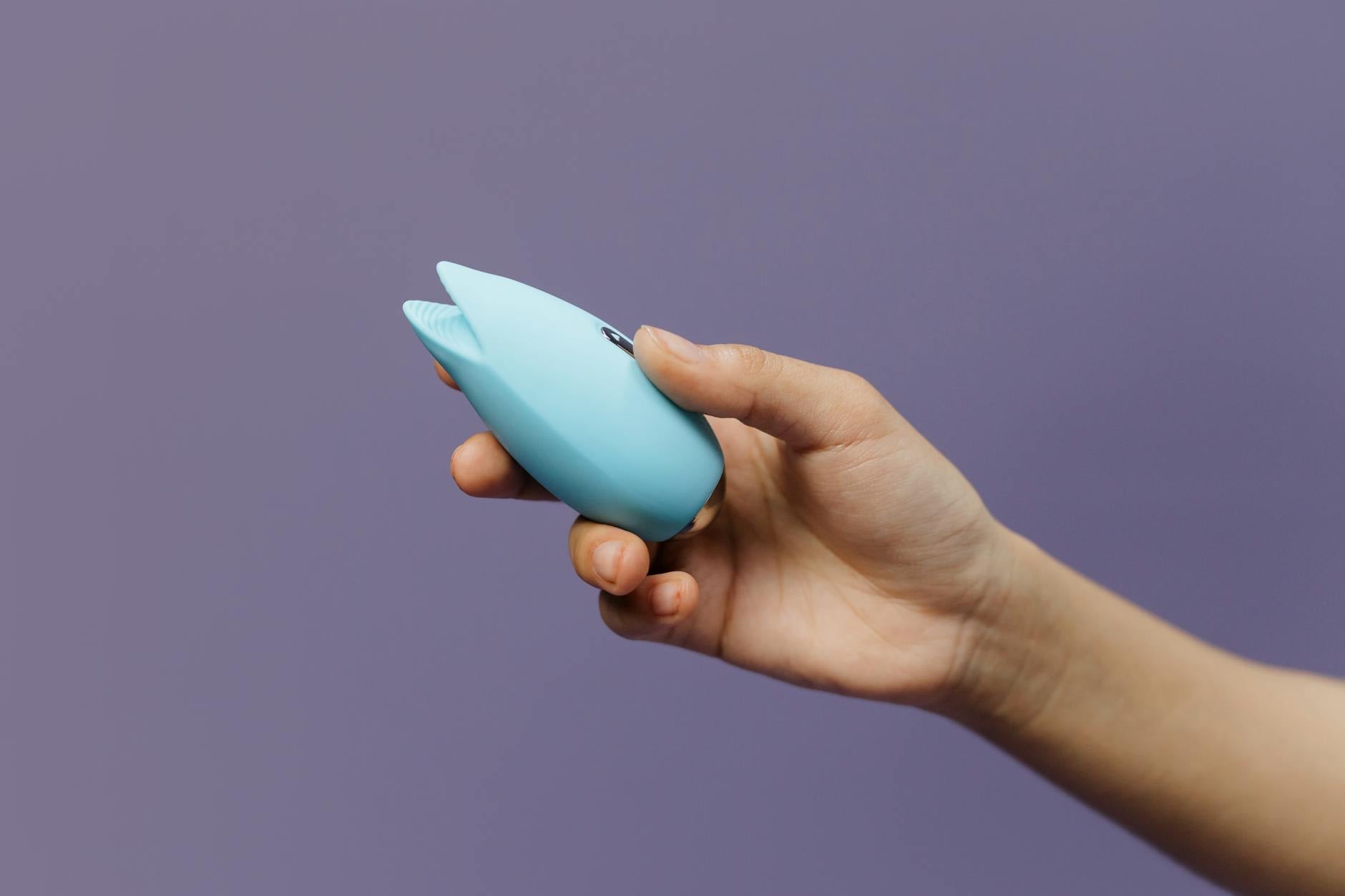
Lemon clitoral vibrators like The Lem Toy change the equation because they shift focus from "am I enough for my partner" to "what do I actually want right now." That autonomy is essential. It tells your nervous system that pleasure belongs to you, not to the relationship ledger.
Here's the research bit: couples who rebuild intimacy by starting with individual pleasure (solo or shared) rather than partnered penetration report higher trust recovery scores at 12 months post-infidelity. That's not coincidence. When pleasure isn't tied to performance or comparison, it becomes safe again.
The first boundary: solo use before shared use
This might sound counterintuitive when you're trying to reconnect as a couple. But it's exactly backwards.
Before your partner even sees you with a lemon vibrator, you need to reconnect with what turns you on. Infidelity creates this weird loop where pleasure becomes entangled with rejection ("my partner found pleasure elsewhere"). Your nervous system starts to associate your own arousal with threat.
Spend 2-3 weeks using a clitoral vibrator solo. Lem vibrators work beautifully for this because the suction stimulation doesn't require the kind of physical tension that holds trauma. You can actually relax into it.
The goal isn't to have a specific type of orgasm or to "perform" pleasure. It's to remind your body that sensation exists separate from your partner's actions. That your pleasure is about you, not about keeping someone interested.
When you're ready: introducing it together
Timing matters. Your partner will know when you're ready because you'll seem different. Not fixed. Not "over it." Just less guarded.
The conversation might sound like: "I've been using the Lem on my own, and I want to explore that with you present sometimes. I'm not ready for X yet, but I'm curious about Y."
Notice that sentence names what's off the table. That's crucial. After infidelity, vague enthusiasm reads as people-pleasing. Clarity reads as trust.
When your partner watches you use a lemon vibrator, several things happen at once (from a nervous system perspective). One, they see you're capable of pleasure without them. That erodes the narrative that infidelity happened because something was missing at home. Two, they see you setting boundaries. That rebuilds confidence that you're solid enough to be in the relationship by choice, not desperation. Three, your nervous system learns that arousal in front of them is still safe.
The patterns that actually work
Four practical approaches that couples I've worked with have found sustainable.
Pattern One: Presence without performance. Your partner is in the room, fully clothed, not doing anything. You use your Lem vibrator. They read, or they watch, or they sit quietly. The permission structure is: "I'm choosing pleasure, and I'm choosing to include you by letting you see this." That's wildly different from performing for them.
Pattern Two: Parallel pleasure. Both of you explore sensation at the same time. You with your lemon clitoral vibrator, them with whatever feels right to them. No synchronization required. This teaches your nervous system that pleasure doesn't have to be coordinated or compared.
Pattern Three: Foreplay extension. Use a Lem vibrator as part of extended foreplay, but with a hard rule: it's not a bridge to something else. It's the main event. This rewires the association between clitoral pleasure and penetration. After infidelity, that separation is essential because it removes the "proof test" energy that makes sex feel like it's about winning something back.
Pattern Four: Slow reintegration. Weeks in, some couples are ready for penetrative sex again. If that's you, use your lemon vibrator during. It serves two functions. One, it keeps your nervous system's center of gravity on your own sensation, not on whether your partner is comparing this to something else. Two, it gives your partner something to watch that isn't their own performance. The focus shifts. Sex becomes collaborative instead of transactional.
What gets in the way (and how to talk about it)
Three common blocks.
"Using a vibrator feels like admitting the relationship isn't enough." This is the infidelity knot tightened. A vibrator isn't about scarcity. It's about pleasure existing independently. After betrayal, that independence is what rebuilds safety. You can say: "I need to feel like my pleasure is my own right now. That's what helps me trust myself again. Using the Lem lets me do that."
"I'm scared to watch because I'll feel like I'm watching you be happy without me." Legitimate. That's the nervous system reading pleasure as proof of abandonment. The antidote is time and tiny exposures. Start with your partner leaving the room while you use your lemon vibrator. Gradually shorten the distance. There's no rush.
"Doesn't this delay us getting back to normal sex?" Yes, deliberately. Normal sex was the context where infidelity happened. You're not trying to get back there. You're trying to build somewhere different. Slower, more conscious, more chosen.
The practical mechanics
If you're using a Lem vibrator as part of rebuilding, these details matter.
Start at pattern settings 1 or 2. Lower intensity helps your nervous system stay regulated. Higher intensity can trigger tension patterns that activate the threat-response. You're retraining, not numbing.
Budget 15-25 minutes. Rushing through sexual activity is how we end up in performance mode. Longer sessions train your body that there's time, that you're safe, that this isn't a test.
Communicate in real time. "I want to slow down" or "I want to try pattern 3" or "I need a break." This is the opposite of the silence that lets infidelity happen invisibly. Narrating your own experience teaches your partner what honesty looks like.
If your partner is present, establish a "no judgment" signal. Could be as simple as: "If I seem uncomfortable, I'll say yellow. That doesn't mean you did anything wrong. It means my nervous system needs a reset."
When to bring in a therapist
You don't need a therapist to use a lemon vibrator during rebuilding. But if any of these are true, professional help accelerates trust recovery:
You can't talk about infidelity without rage or shutdown appearing. A Gottman-trained therapist can teach you how to have those conversations without your nervous system hijacking.
Your partner minimizes what happened or expects you to move on faster. That's a yellow flag for whether they've actually committed to repair. A good therapist names that directly.
You're using sex (or sex toys) as a way to avoid the emotional work. It happens. A therapist helps you separate the two and do both.
Trust rebuilds slowly. A clitoral vibrator can support that process beautifully, but it can't replace the harder work of honesty, boundaries, and time.
People also ask
Is it normal to not want sex at all after infidelity?
Yes. Completely normal. Your nervous system is doing its job by saying "this doesn't feel safe." Some couples need weeks or months before physical intimacy resurfaces. That's not failure. That's healing moving at the right speed. When desire does return, it's often stronger because it's chosen, not obligatory.
Can using a vibrator together help us feel closer?
It can, but only if both people genuinely want it. If one partner is performing enthusiasm while the other is proving they can still "perform," the vibrator just documents the problem in stereo. Start with solo use. Move to shared presence only when you both actually feel curious, not obligated.
How long does it usually take to rebuild intimacy after infidelity?
Research suggests 2-5 years for couples who stay together. That sounds long until you realize the alternative is staying with unhealed resentment. If you're trying to rush this, that's usually a sign one partner wants to move on before the other has actually healed. That's when professional support helps clarify what's really possible.
Should I tell my partner I'm using a lemon vibrator, or should I surprise them with it?
Tell them. Surprise anything sexual after infidelity reads as a violation of consent, even if it's not intended that way. Your partner's nervous system is already on alert. Announcing your intentions ("I'm going to start using the Lem in my own time") gives them the information they need to feel safe. And when they do see it, it's a choice they made, not something imposed.
What if my partner feels threatened by the vibrator?
That's real, and it deserves conversation, not dismissal. Ask: "What feels scary about this?" Often it's "I'm afraid you're replacing me" or "I'm afraid I can't satisfy you." Those are the actual conversations to have. A vibrator isn't the problem. The insecurity underneath is. Once you name it, you can address it together. And sometimes a partner's feelings about toys shift when they realize the tool is actually helping the couple reconnect.
Can a vibrator fix a relationship that's broken by infidelity?
No. It can support the repair process, but the work is the honesty, the boundaries, the therapy, the time, and the choice to stay. A lemon vibrator isn't therapy. It's a tool that reminds your nervous system that pleasure is possible again. The relationship itself heals through the harder, slower work of rebuilding trust.
The takeaway
Infidelity breaks the sense of safety in a relationship. Rebuilding it requires patience, clear boundaries, and tools that help both partners experience autonomy and choice. A clitoral vibrator like The Lem Toy can be part of that process, but only if it's used intentionally. Start solo. Move slowly. Communicate constantly. And remember that the goal isn't getting back to normal. It's building somewhere better, somewhere you both actually want to be.
If you're navigating this, you deserve support. A therapist who specializes in infidelity recovery can guide you through the specific dynamics in your relationship. And small tools, like a well-designed lemon vibrator, can remind your body that pleasure is worth reclaiming.