Here's the thing nobody says out loud
One of you finishes in ten minutes. The other needs thirty. You're both normal. And you're probably both frustrated.
The timing gap in sex is one of the most common relationship tensions that almost never gets discussed directly. Instead, it gets dressed up as something else. "You're not in the mood." "I'm too tired." "You're taking too long." What's actually happening underneath is a logistics problem. And logistics problems have solutions.
Why this even matters
When sex feels misaligned, it stops feeling good for either of you. The faster partner feels pressure to stay engaged longer than their body naturally does. The slower partner feels rushed, guilty, or worse, like they're a burden. Over time, that turns into resentment. People stop initiating. Or they initiate and immediately feel bad about it. The whole thing becomes another chore instead of something you both actually want.
The research backs this up. Couples therapists see the same pattern constantly. Mismatched arousal timing is one of the top five reasons couples report less frequent or less satisfying sex. It's not that anyone's doing something wrong. It's that no one ever put together a system that works for both bodies.
The problem with the standard approach
Most advice tells you to "go slower" or "communicate better." True, but also not helpful, because it doesn't actually solve the timing problem. You can communicate perfectly and still have a body that needs thirty minutes while your partner's done in ten. That's biology. Willpower doesn't change it.
The second piece of bad advice is framing it as foreplay. "Just spend more time on foreplay." This makes the faster partner feel like they have to perform labor before the actual sex starts. It adds pressure instead of removing it. And it still doesn't sync the actual experience.
Here's what actually works: reframe what sex means when you have different timelines. Instead of one synchronized moment, you're building a longer experience where you each get what you need, and you're doing it together.
How lemon vibrators solve this specific problem
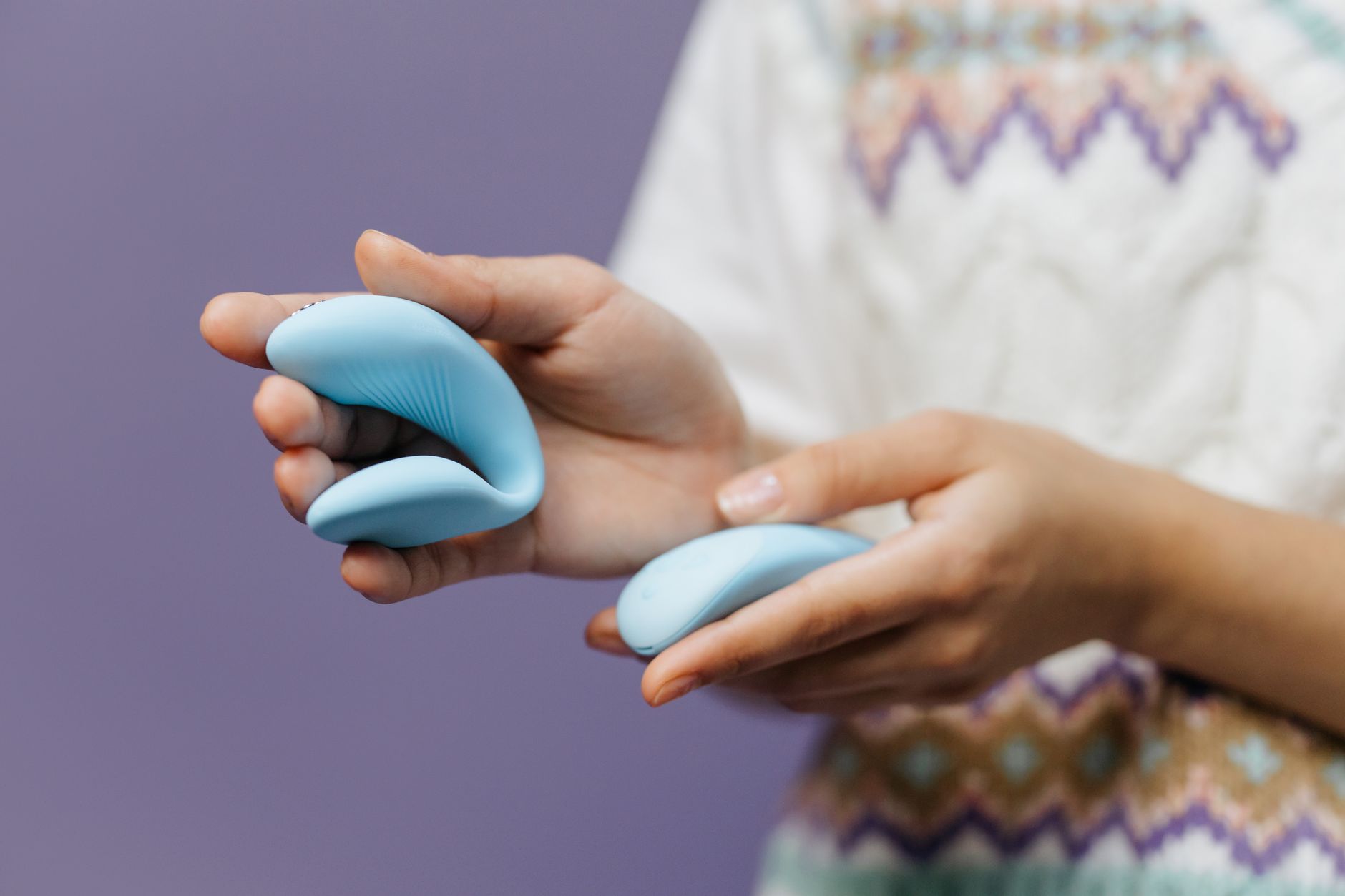
Clitoral vibrators like the lemon design work here because they give the slower partner autonomy over their own pleasure without requiring the faster partner to keep going. This is the key shift.
There are a few ways to use them depending on your setup.
The simultaneous approach. Your partner enters, and you use the lemon vibrator on yourself at the same time. You're still connected, but you're each controlling your own pace. This means your partner doesn't have to maintain intensity longer than feels good for them, and you get exactly the stimulation you need. Most people find this balances the experience. The faster partner feels less pressure. The slower partner feels less rushed.
The extended rhythm. You start with manual stimulation or penetration. Your partner finishes. Then, instead of stopping entirely, they use the lemon vibrator on you while you're already aroused. The momentum is there. You're not starting from cold. This typically takes ten to fifteen minutes instead of thirty because you've already built arousal.
The dual-device setup. Both partners use a lemon vibrator or another toy. This removes penetration from the equation entirely and puts both of you on equal footing. No one's "taking too long." You're both self-directing. It's genuinely synced because you're both in control of your own intensity.
The conversation you need to have first
None of this works without talking about it directly. Not during sex. Not when either of you is feeling rejected or frustrated. Pick a neutral moment. Over coffee. On a walk. Somewhere you're not touching and there's zero pressure.
Start with the actual problem statement: "I've noticed we have different paces, and I don't think either of us is enjoying it as much because of that."
Then get specific about what you each need. "I usually need about thirty minutes of stimulation to orgasm." "I usually come in about ten minutes." "I feel guilty when I finish first." "I feel rushed when I'm still building." These are just facts. Not accusations.
Then propose the solution. "I've been thinking about trying a lemon vibrator so we can both get what we need without one of us feeling bad." You're offering a tool, not criticism.
Most partners respond well to this because it lifts the guilt off both of you. Suddenly it's not a personal failing. It's a logistics problem with a straightforward fix.
The physical setup that actually works
If you're doing simultaneous penetration plus clitoral vibration, position matters. Spooning from behind works well because your partner can easily hold the lemon vibrator while moving. Missionary with the toy used externally works. Anything where one of you has a hand free is fine.
Don't overthink this. Awkward is normal the first time. Give it three or four attempts before you decide it's not working. Your bodies need to learn the rhythm together.
Managing the mental part
Here's where most couples trip up. You'll start using the vibrator, and one or both of you will feel weird about it. The faster partner might feel like they're not "enough." The slower partner might feel like they're taking over or being demanding.
Neither of those feelings is true. You're both just trying to have sex that feels good. That's it. No one's inadequate. No one's broken. Different bodies have different timelines.
If you notice resistance, name it. "I feel like I'm failing you." "I feel like I'm being high-maintenance." Then counterargue it directly. "You're not failing me. My body just works differently. This is us working WITH our bodies, not against them." Say it out loud. Shame thrives in silence.
When this actually transforms things
Most couples tell me that within a few weeks, the whole dynamic shifts. You're not anxious during sex anymore. You're not watching the clock. You're not resentful afterward. You're actually present because you're both getting what you need.
Sex gets longer. But it gets better too, because it's not wrapped up in guilt and frustration. The faster partner relaxes because there's no pressure to keep going. The slower partner relaxes because they're not rushing. You both actually enjoy it.
This isn't a forever setup either. Once you've untangled the anxiety, you might find that your natural paces shift. Or you might keep using lemon clitoral vibrators because they just feel good. That's fine. The point is you're moving from a system that wasn't working to one that does.
The one thing to avoid
Don't use a vibrator as punishment or makeup sex. Don't say "Well, I guess we need the toy since you're too fast." Don't make it mean something it doesn't. It's a tool. Tools are neutral. They're only good or bad based on how you use them.
Also don't assume it's one-time use. The lemon vibrator isn't a fix you apply once and then never touch again. It's part of your regular toolkit. Like lube or anything else that works for your bodies.
People also ask
Should we use a vibrator every time we have sex?
No. Some people use lemon vibrators every time. Others use them once or twice a week. Listen to what feels good. If you're using it because you feel obligated, that's different than using it because you want to. The goal is pleasure, not performance.
What if my partner thinks the vibrator means they're not enough?
That's the insecurity talking, and it's worth addressing directly. Most partners feel this way initially. Reassure them: "I want more time with you. That's literally what this is for. So we can both feel good and stay connected longer." Then show them by using it together, not as a replacement.
Does using a vibrator change the dynamic of the relationship?
Yes, but in a good way. It changes you from being in conflict over sex to being teammates solving a problem together. That actually strengthens intimacy. You're being vulnerable about your needs. You're trying something new together. That's relationship-building stuff.
How do we start this conversation without it being awkward?
Write it down first if you need to. Text it. Say it over dinner. There's no shame in needing a script. The awkwardness is just newness. It passes. What doesn't pass is the resentment that builds when you never talk about the timing problem.
Can lemon vibrators work for other couples issues too?
They can help with specific ones. If one partner has pain with penetration, a lemon vibrator gives you an alternative. If someone's having trouble orgasming, the suction design often helps. But they're not a cure for deeper relationship problems. If you're not communicating or there's real conflict, start there first.
What if we've been struggling with this for years?
It gets easier the more you do it, even if you've been stuck on this for a long time. The first conversation is the hardest. The first time using a vibrator together is the most awkward. After that, it's just part of your rhythm. Give yourself permission to be clumsy at first.
The real win here
The timing gap isn't actually about the vibrator. It's about permission. Permission to need what you need without guilt. Permission for your partner to need something different. Permission to ask for help. Once you have that permission, the mechanics are easy.
A lemon vibrator is just the tool that makes that permission concrete. It says, out loud, "Your body is fine as it is. My body is fine as it is. We're solving this together." That's the part that changes things. The toy is just the vessel for that conversation.